Understanding how to decolonise the physical space within the University
A student-led research project to foster belonging within Business School spaces.
Universities are not neutral spaces. Their buildings, layouts and everyday practices are shaped by particular histories, values and power relations, many of which are rooted in colonial legacies. From architectural styles to how space is organised and used, university environments can subtly communicate who belongs, who is centred, and who feels marginal or out of place. The Welcoming Spaces project set out to explore how the physical spaces within the Business School are experienced by students, and how these spaces might be reimagined to better support belonging, connection and inclusion.
The project was launched in response to feedback from students during a focus group in 2023, where issues of separation, disconnection and lack of representation were repeatedly raised. Students spoke about feeling excluded not only through curriculum and institutional processes, but also through the physical spaces they moved through every day. In response, the project aimed to generate research-informed ideas for designated spaces that could promote inclusivity, belonging and community engagement within the Business School. We worked alongside Clarice Metzger, who specialises in creating authentic and representative spaces who advised the project along the way.
Central to this initiative was working collaboratively with students to understand their needs and experiences, and to ensure that any proposals were shaped by those who use these spaces most. Using a mixed-methods approach, the project combined creative and empirical methods, including poetry workshops and a student survey, to gather insights into how space is felt, used and imagined. By placing student voices at the centre of the research, the project sought to ensure that suggested changes were both meaningful and grounded in lived experience.
The project was co-led by BSc Economics students Eva Doherty and Eesha Khurram as part of a Student Research Internship Scheme. Motivated by a desire to better understand equity, diversity and inclusion (EDI) in practice, the students used this opportunity to explore how decolonisation efforts extend beyond the curriculum and into the material and social environments of the Business School. Through this work, they developed a deeper understanding of student representation, inclusive practices and the importance of collective approaches to institutional change.
Poetry workshops: thinking differently about space
The poetry workshops not only generated valuable data, but also created a space for shared reflection and conversation. They demonstrated how creative methods can open up different ways of knowing and articulating experience, particularly in relation to issues of belonging, identity and power. Together with the survey findings, this work forms the basis for ongoing conversations about how the physical spaces of BBS might be reshaped to better reflect and support its diverse student community.
A key element of the project was the use of poetry workshops as a creative research method. These workshops were designed and facilitated by students to encourage participants to reflect space within the Business School in ways that went beyond functional use. By combining walking, observation and creative writing, the workshops invited students to slow down and notice how different spaces made them feel, what they revealed, and what they obscured.
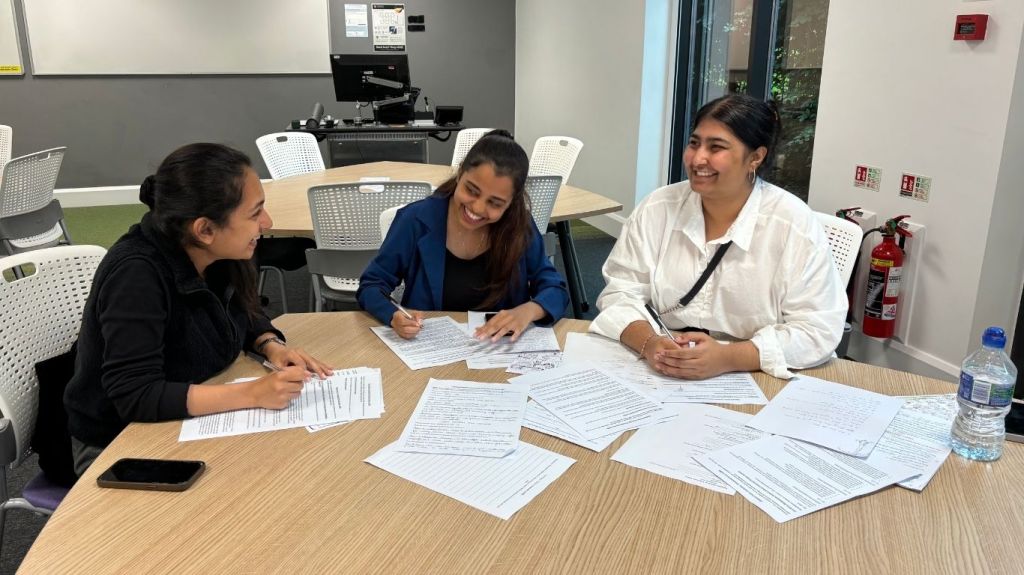
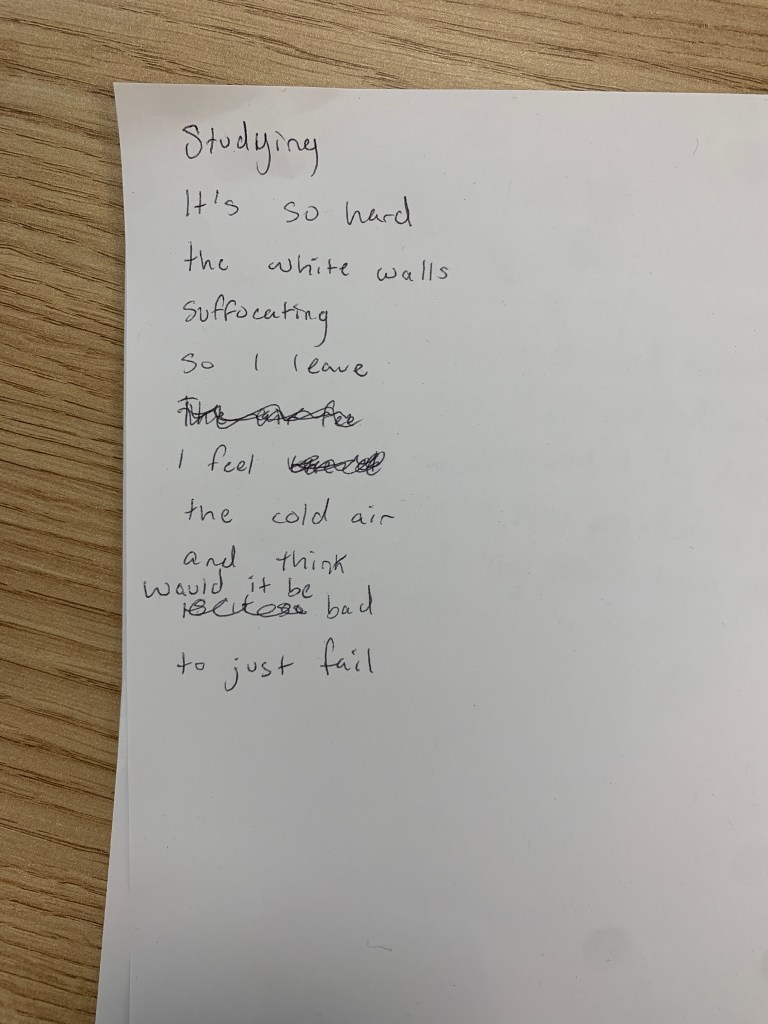
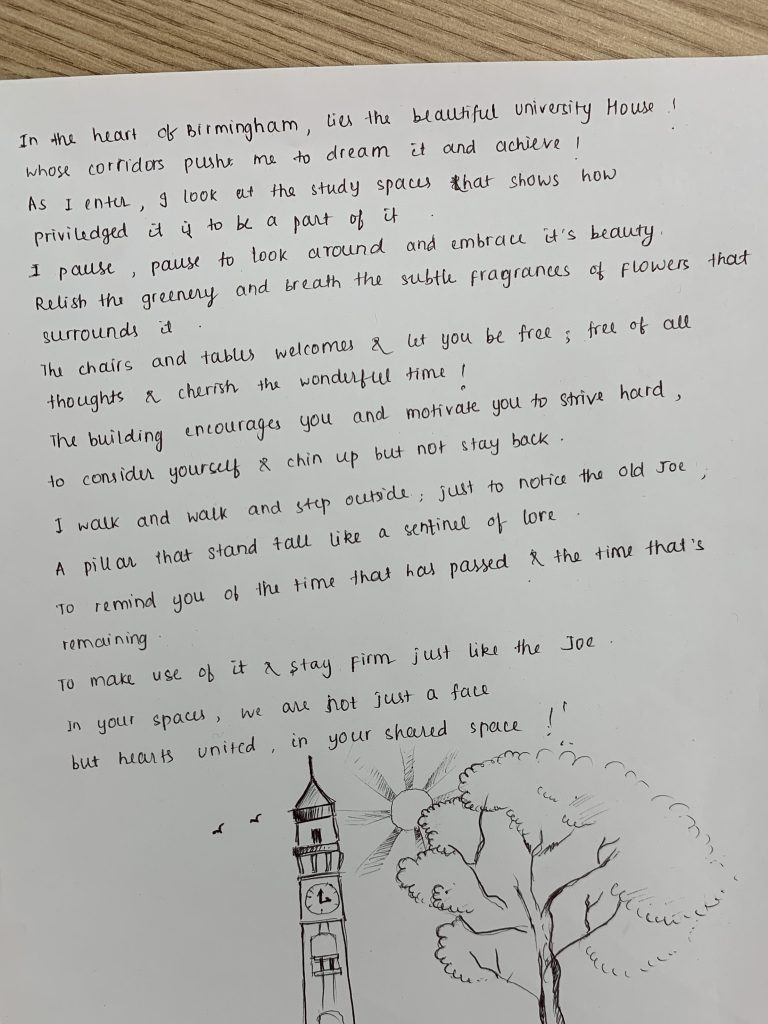
Participants were guided on a walk around selected areas of University House and its surrounding spaces, using prompts to reflect on comfort, visibility, atmosphere and belonging. This was followed by a short introduction to poetry as a method of expression, before students worked individually and in groups to write poems about their experiences of space. These poems provided rich qualitative insights into how students relate emotionally and socially to the environments they inhabit, highlighting the role of colour, comfort, art, interaction and representation in creating welcoming spaces.
Explore our other project activities:
 Decolonising a Business School