A bottom-up approach to decolonising the Business School
The Seedcorn Fund was established to support and encourage colleagues to explore decolonisation across research, education, and operational practices, complementing the activities led by the project team.
Its purpose is to empower staff to develop their own initiatives, whether within specific disciplines or through cross-disciplinary collaborations, allowing decolonisation to be explored on their own terms. The fund has enabled a wide variety of projects, from workshops and seminars to research studies and reading groups.
For instance, colleagues have used the funding to examine disciplinary approaches to decolonisation,
such as exploring how Economics or Accounting curricula can better reflect inclusive and diverse perspectives. Other projects have focused on assessment practices, international campuses, or embedding historical and colonial contexts into teaching. This flexible, bottom-up approach encourages staff to experiment, innovate, and tailor interventions to their own areas of expertise, generating meaningful contributions to the School’s decolonisation agenda.
Seedcorn fund example 1:
Implications, issues and challenges of decolonisation as it relates to the Dubai campus
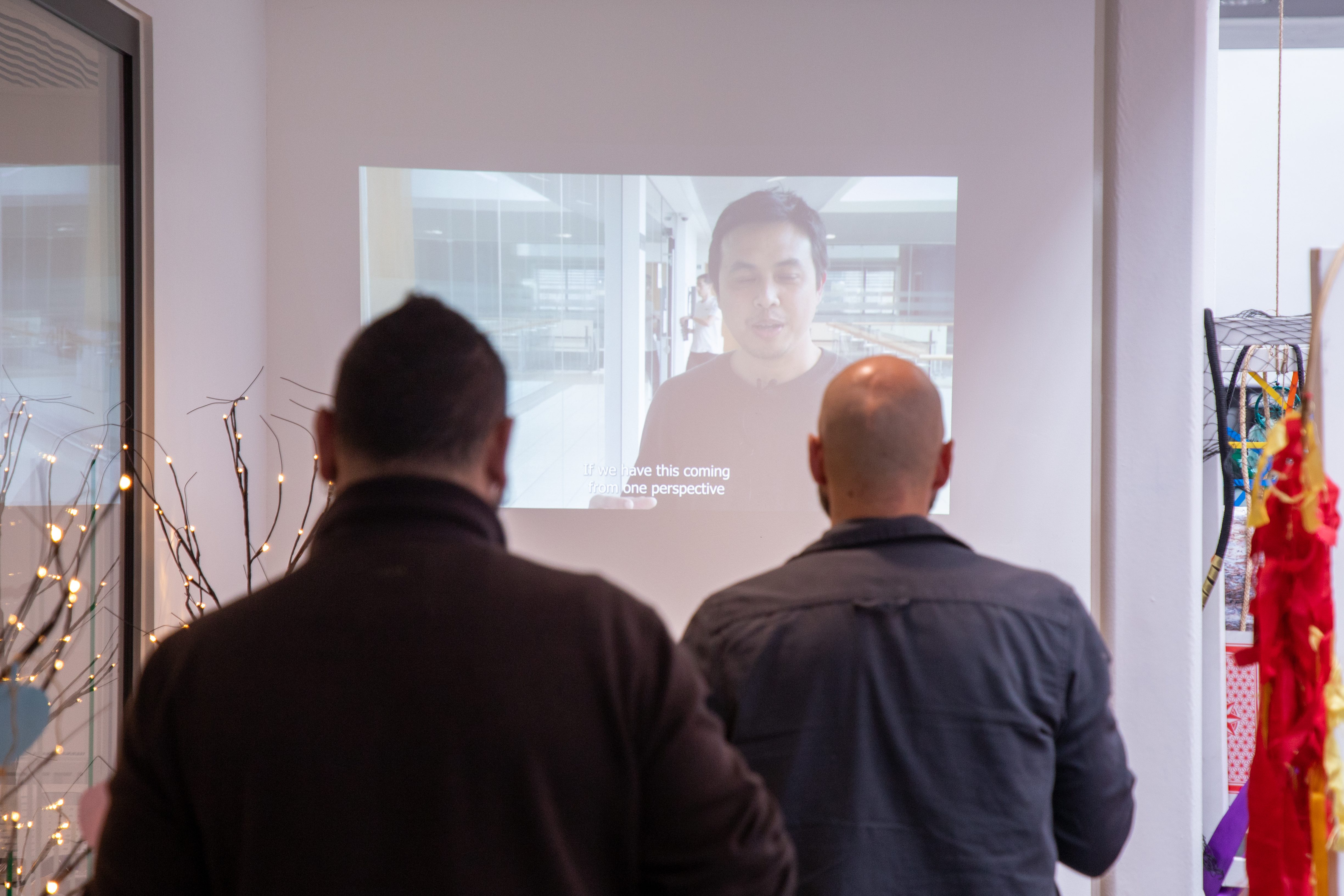
“Decolonization and the process of decolonizing the curriculum will have different meaning of different groups (Muldoon, 2019). UAE was a previously a British colony, it population is multicultural with a significant group of migrant workers from previous colonies. The Ministry of Exudation’s website noted that private sector education the British Curriculum is one of 14 curriculum (ADEK 2023) , offered in the UAE. It is against this background that the author approached the study on decolonizing the curriculum. Studying at in our Dubai campus would have been an informed choice. In exploring this topic the author will share the various perspectives gained during the network events and in discussion with student groups..”

Seedcorn fund example 2:
The Decolonisation of Economics
“The aim of our project is to investigate the perceptions and attitudes of both academic colleagues and students towards the decolonisation agenda developing in the Business School. Using the outcomes of student and staff surveys, interviews and focus groups, we present the emerging themes and challenges to the advancement of the agenda. We will also aim to propose specific areas where the decolonisation is most likely to take place and be beneficial for the overall development of an inclusive curriculum. We will compare our findings to the examples / proposals of decolonisation of the economics curriculum in other institutions.”
Seedcorn fund example 3:
Decolonising Book Club
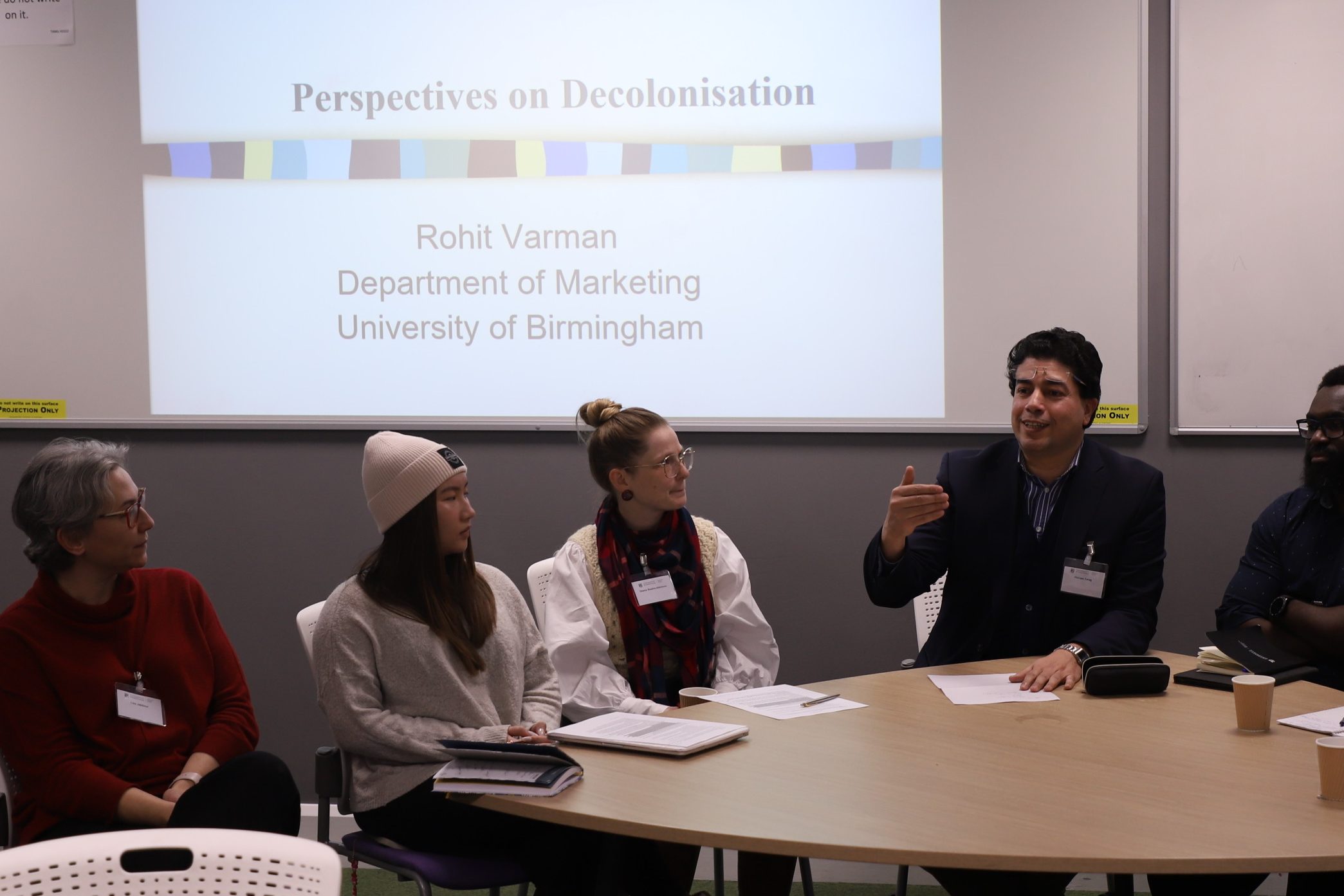
“Educating ourselves around what decolonization is and how it can be undertaken within a business school setting is fundamental to moving this agenda forward. The Decolonizing Book Club was formed to provide a space where members of the Business School could come together to discuss books and articles key to developing our understanding of this agenda. In addition to reading the seminal text, On Decoloniality by Mignolo and Walsh, we had the opportunity to spend a day discussing this agenda with one of the UK’s leading scholars in the field, Professor Bobby Banerjee from the Bayes Business School in London.”

Seedcorn fund example 4:
Decolonisation and Modern Slavery
“A recent report by the International Labour Organization observes that nearly 55 million people are trapped in slavery across the world. Modern slavery is found in different sectors of the global economy both in the Global South and North. Despite its widespread existence, marketing theorists have paid relatively little attention to modern slavery. This interdisciplinary research, offers insights into the conditions of modern slavery. By examining India as a site of modern slavery the research shows how contemporary capitalist accumulation is based on neocolonial relations of production. The research further contends that decolonisation cannot be achieved without containing the neocolonial impulses of capitalism.”
The Seedcorn Fund has been crucial in developing a culture of co-creation and reflective practice within the School. By providing resources, and institutional support, it has enabled staff to test new ideas, share knowledge with colleagues, and produce outputs that extend beyond their individual projects. It has also fostered collaboration between staff and students, creating opportunities for dialogue, mentorship, and engagement with external organisations and communities.
Ultimately, the Seedcorn Fund serves as both a practical and symbolic commitment to embedding decolonisation into the everyday work of the Business School. By supporting a wide range of initiatives across the School, the fund encouraged innovative approaches ensuring that decolonisation is not only an institutional priority but a lived practice across the School.
Explore our other project activities:
 Decolonising a Business School