Our approach
Our approach to the project was guided by a set of principles that shaped how we engaged colleagues, students, and partners, and how decolonisation was explored in practice.
The 5 Cs
Our approach to decolonisation developed organically, allowing colleagues across disciplines and operational areas to shape their own understandings and ways of engaging with this work. This helped build momentum and a growing sense of shared ownership across the school, with participants becoming co-producers rather than passive recipients of change. From the outset, our aim was to embed decolonisation within everyday practice, so that colleagues and students feel empowered to take action beyond the lifespan of a dedicated project team. We have been clear that this is a school-wide endeavour, not owned by individuals, and that its sustainability depends on collective participation. Alongside this internal work, we also engaged with partners beyond the school, drawing on insights from those working on decolonisation in other organisational and UK contexts.
Reflecting on our practice, we have come to understand our approach through five interrelated principles, the 5 Cs, which helped guide how this work was shaped, supported and sustained.
- Conversations: Experience of decolonisation initiatives shows that decolonising can encounter resistance and backlash as it challenges the status-quo for staff and students and the principles of the neo-liberal university. Making space for conversations was an important part of this project. In fact, making decolonisation part of normal conversations in the school was a significant achievement.
- Dis(Comfort): Decolonisation can be a risky, uncomfortable and unsettling journey. To create a supportive and safer space, we worked with a charitable organisation specialising in workplace equality to establish a set of ground rules for the decolonisation work to proceed. These rules were shared with participants with the aim of creating the conditions and space to have open and potentially difficult conversations.
- Context: Colonisation and colonial history have taken various shapes and forms across the world. The work discussed here is situated within a British business school. As such, it is located within the British colonial history and its legacies.
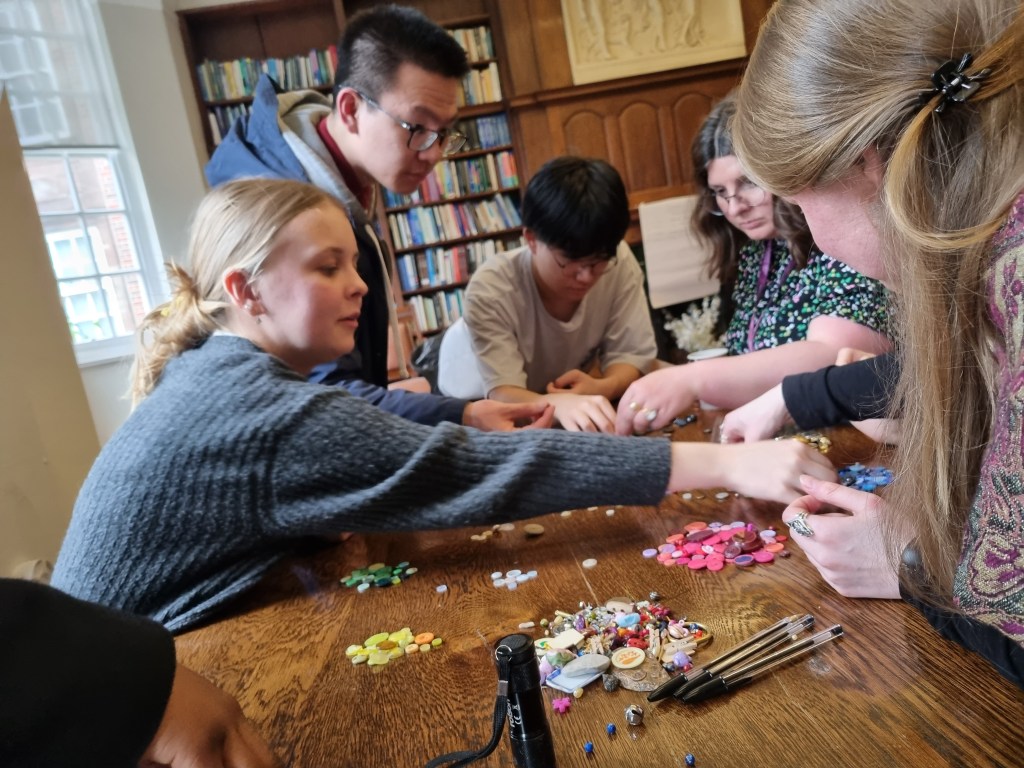
- Creativity and co-creation: A range of creative methods were used throughout the project to engage staff and students with decolonisation. This approach stems from the recognition that arts and creative methods can help engage people in a decolonial manner in fostering other ways of knowing and interacting. This creative approach was developed by establishing collaborations with local or regional artistic organisations such as: a theatre company, a network offering historical walking tours and an art gallery.
- Co-producers: Decolonisation work can be challenging and take an emotional toll, especially when implemented across an organisation. It can generate backlash, and it is very difficult to conceive of an end point as it requires continuous rethinking and re-imagining on the part of the people involved. This project at emerged from, and has been run with, a small team of people and with the support of the Deans and School’s management team. Resources in terms of time and budget were allocated to the team for a period of 3 years. However, if the project was to develop from the bottom-up as the team intended, it was clear that participation was needed from across the organisation.
Together, these five principles provided a way of understanding how the project evolved in practice and how decolonisation was approached as an ongoing, collective process.
Decolonising a business school is a long-term journey that cannot be achieved quickly or easily. Our aim was to recognise the presence of colonial legacies across teaching, research and operations and to begin finding ways to dismantle them. This required a holistic approach, ensuring decolonisation was not limited to the curriculum but applied across everything the school does, from research and teaching to external partnerships and day-to-day operations. Over the initial three-year period, the project focused on fostering collaboration, experimentation, and reflection across the school community.
The sections below summarise some of our activities in these three areas, showing how we approached embedding decolonial practice while remaining aligned with our broader project aim of reimagining the business school in a more inclusive and socially just way.
 Decolonising a Business School