Working in partnership with the Barber Institute of Fine Art
Recognising that UK business school education has been built around predominantly western models of thinking, this interdisciplinary project sought to promote students’ reflection on and discussion of responsible management topics by using fine art as a medium.
Decolonising business education involves more than revising syllabuses – it requires questioning how knowledge is made, who is centred in that knowledge, and how teaching methods can open space for critical reflection and alternative worldviews. In this spirit, the collaboration with the Barber Institute of Fine Arts brought students out of familiar classroom environments and into the gallery, using art to explore colonial legacies embedded within business education, stimulate reflexivity, and support more inclusive ways of learning.
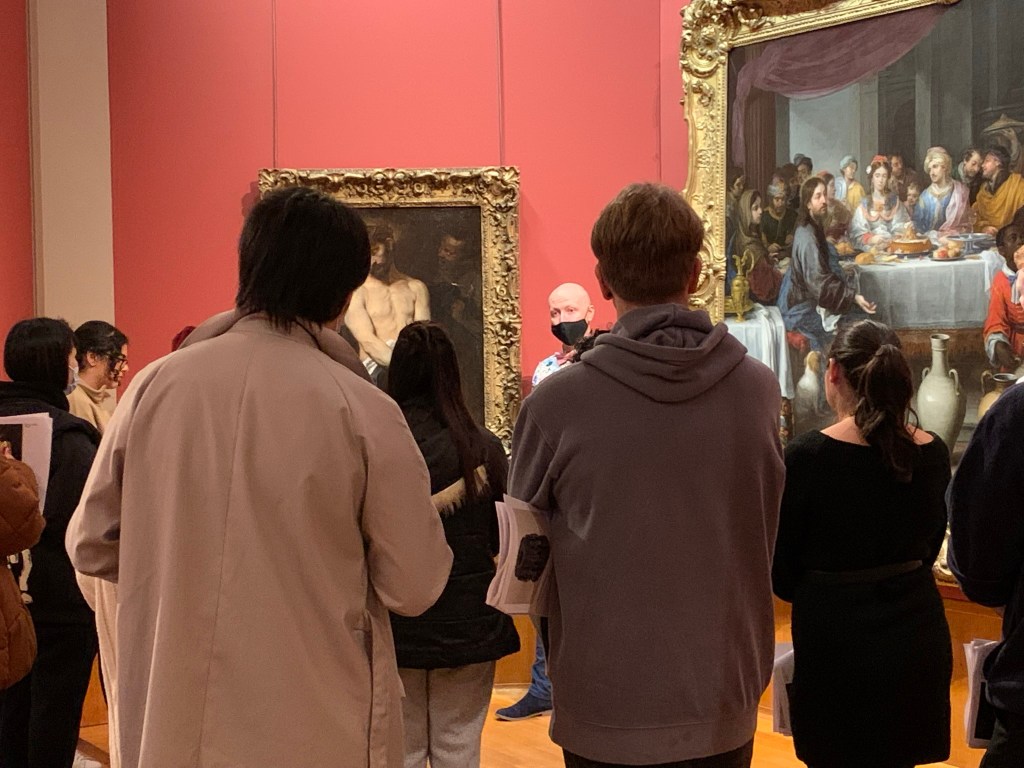
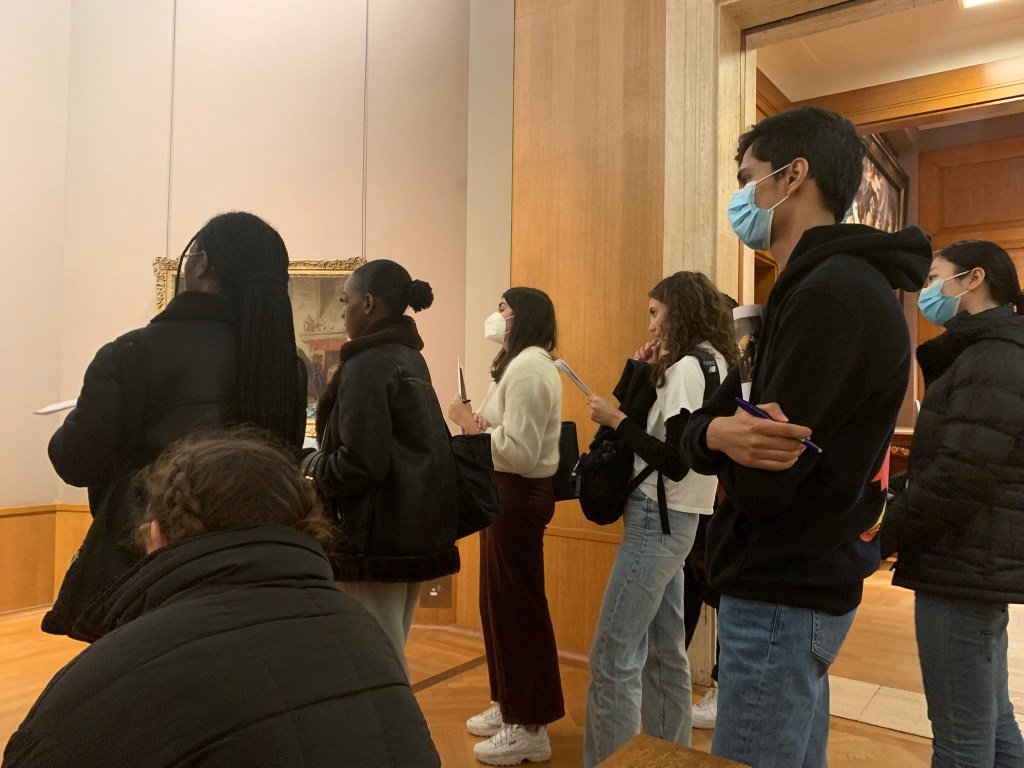
Traditional business curricula and pedagogies often reproduce Western-centric narratives that marginalise other knowledge systems. To counter this, the project invited students to engage with selected artworks at the Barber gallery in Birmingham. By foregrounding “slow looking”, a deliberate, sustained engagement with visual material , participants were encouraged to observe deeply, question assumptions, and connect artistic representations with broader themes of colonialism, ethics, values, and historical power relations.
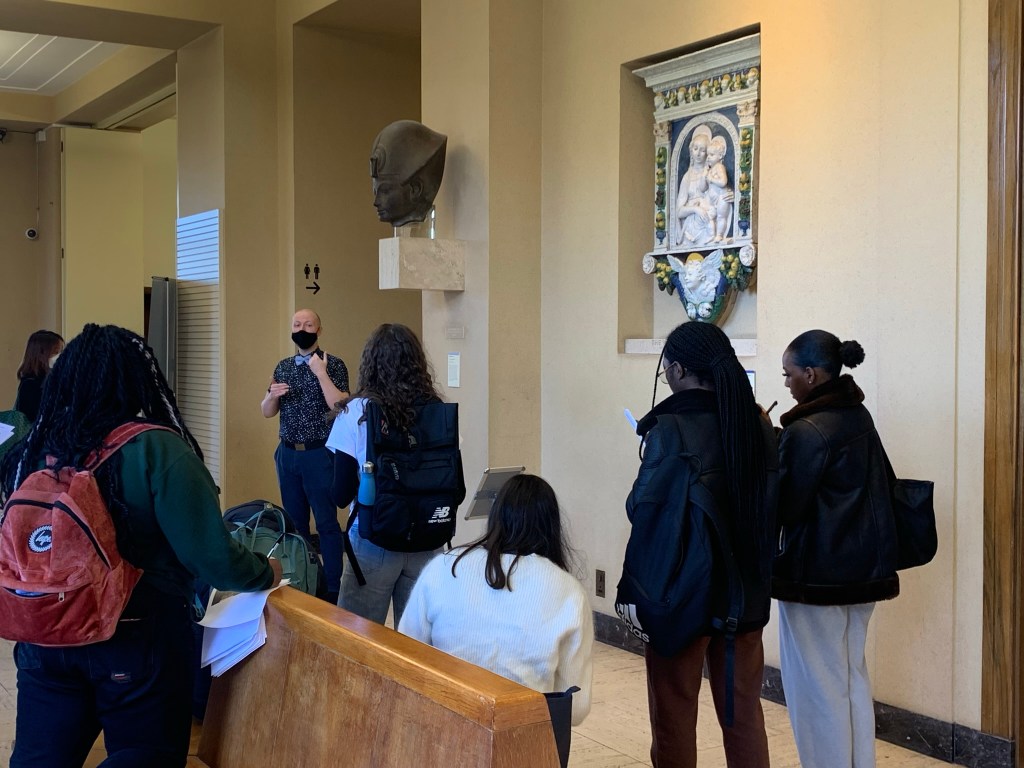
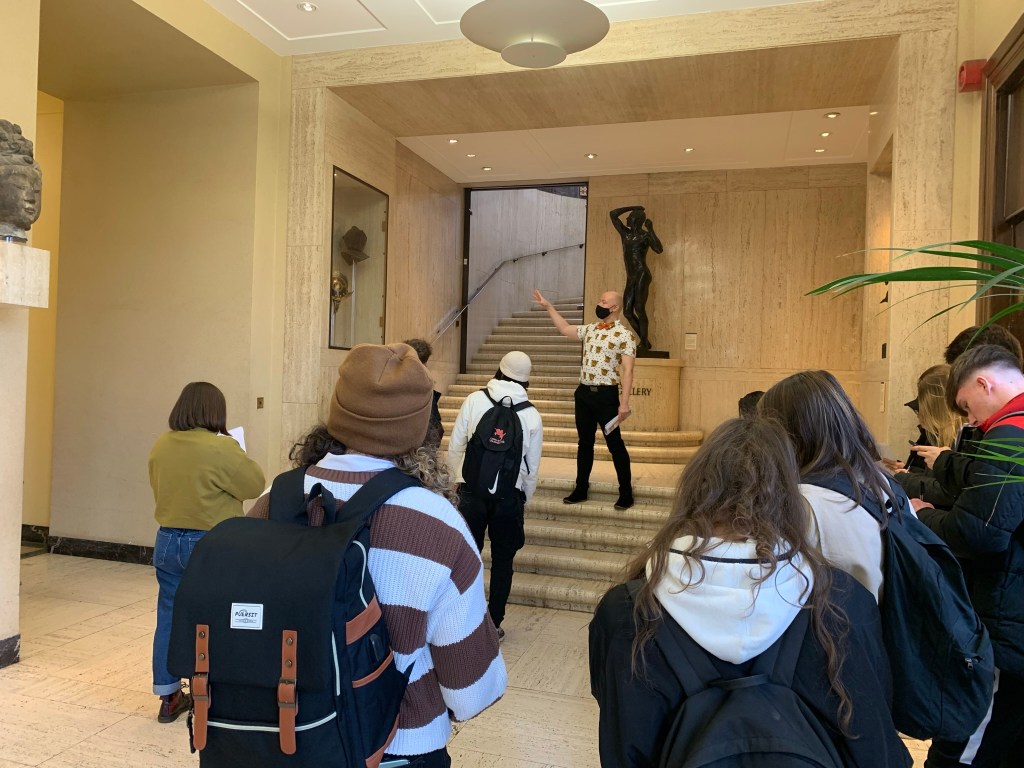
The workshops began with guided gallery visits where facilitators introduced artworks that resonated with themes relevant to each module’s learning objectives. Each work served as a point of departure for discussion, connecting visual culture with questions about the history of colonial violence, the ethics of representation, and the ways business and marketing education often obscure such histories. Students were invited to reflect verbally and in writing throughout the workshops, supported by preparatory materials and follow-up seminars that helped link their gallery experience to core module content. Feedback showed that the approach deepened students’ understanding of decolonisation and encouraged them to critically examine their own assumptions about business knowledge. Many participants reported that engaging with art expanded their capacity for critical thinking, reflexivity, and ethical reasoning in ways that traditional lectures rarely achieve.
The collaboration offered several insights into decolonial pedagogy within business education. Teaching in a gallery setting, rather than a traditional classroom, created space for different forms of engagement and reflection. Creative methods such as slow looking enabled students to engage with emotional, embodied and subjective dimensions of learning that are often marginalised in conventional business teaching. The project also demonstrated the value of cross-disciplinary collaboration between a business school and a cultural institution in opening up more nuanced conversations about history, power and knowledge production.
The work highlighted important considerations for others interested in similar approaches, including the need for ethical care and safeguarding when addressing sensitive histories, recognition of students’ diverse backgrounds and prior knowledge, and the importance of adapting creative pedagogies to specific institutional and cultural contexts.
This project was funded by the PRME Chapter UK & Ireland Innovative Pedagogy Competition 2021-22.
Explore our other project activities:
 Decolonising a Business School