What does it mean to decolonise?
For us, decolonisation is a deeply contextual and reflective process. We understand it as recognising how colonial values and power structures continue to shape Western business schools, and as a commitment to decentring Eurocentric, hegemonic ways of thinking to create space for alternative worldviews. This work requires us to look critically at every aspect of the Business School—what and how we teach, the knowledge we produce, how we collaborate with partners, and how we operate on a day to day basis.
Many scholars argue that business schools have helped reproduce colonised systems of knowledge or even supported systemic racism, which makes this work especially urgent in our context. Our approach begins with interrogating our histories and examining how our own thinking has been shaped by these legacies. We recognise that this can be uncomfortable, but it is necessary if we are to rethink, reframe and rebuild our School in ways that do not preserve dominant colonial perspectives.
The context of UK Business Schools
Business schools have been slower than many other sectors to fully engage with decolonisation, yet the urgency for action has grown sharply. Initiatives across learned societies, academic networks and special issues, along with high-profile developments such as the renaming of Bayes Business School, signal a shifting landscape. Sector bodies like CABS and BAM now identify decolonisation and social equity as strategic priorities, reflecting the reality that our schools educate and employ highly diverse international communities whose experiences must shape how we work. At the same time, scholars have challenged business schools’ complicity in reproducing colonised knowledge systems and even sustaining racist power structures—critiques that call for deeper reflexivity and accountability from institutions like ours. At Birmingham Business School, we see decolonisation as integral to our mission to be a responsible business school. Our project seeks to understand what decolonisation means in our specific context and how it can be enacted meaningfully in practice.
Who we are
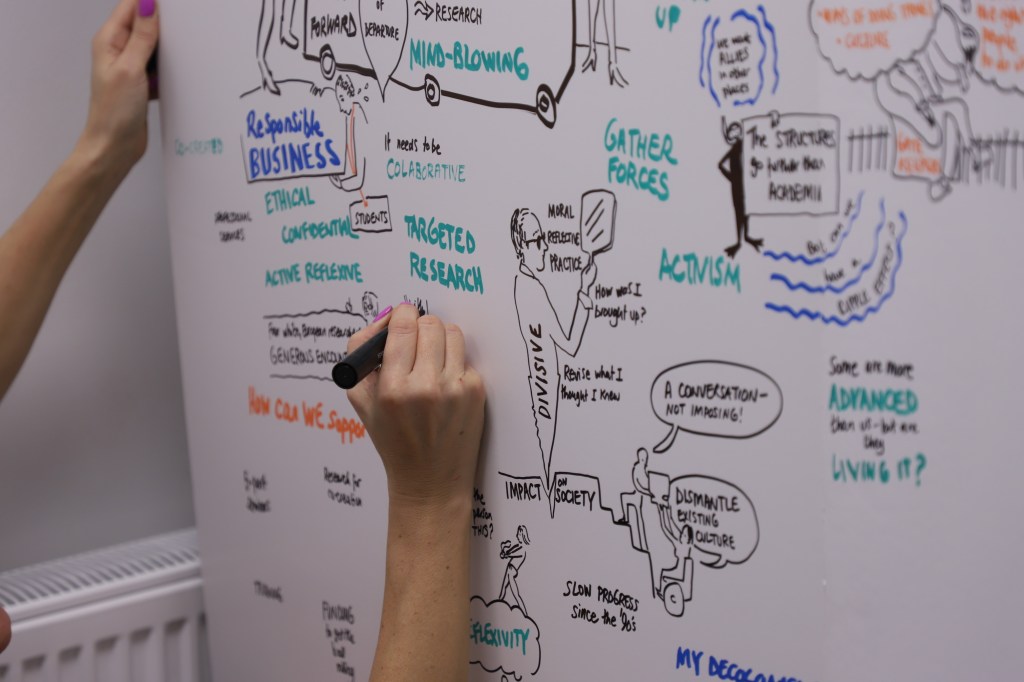
Engaging in moral reflexive practice has been essential to our approach, aligning with decolonial scholars’ emphasis on positionality. We believe it is important to acknowledge our own positions and what brought each of us to this work. A guiding question for us throughout this project has been: What can I do from where I am?
Caroline Chapain
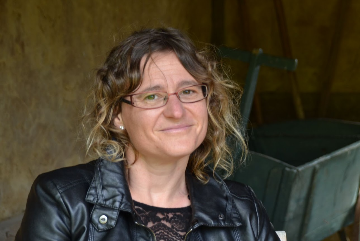
Caroline is Associate Professor in Management at
Birmingham Business School. Born of French nationality, Caroline has studied, worked and lived in Mexico, France, Canada and the UK. This cross-cultural experience made her reflect on the notion of identities and cultural practices as well as issues related to the production of knowledge.

Anita Lateano
Anita is a Research Fellow on the project alongside studying for her PhD. Born in the UK, Anita identifies as mixed race with heritage that spans both Asian and Latin America. With a background within the environmental and charity sector she is interested in critically understanding how colonial legacies continue to contribute to climate and environmental injustices.

Rweyemamu Ndibalema
Rweyemamu is an Associate Professor in Management at Birmingham Business School. Decolonising
business education coincides with his passion to foster an academic environment where every person is not disadvantaged by the dark colonial legacy but instead encounters the best conditions and opportunity to reach their full potential.
Emma Surman
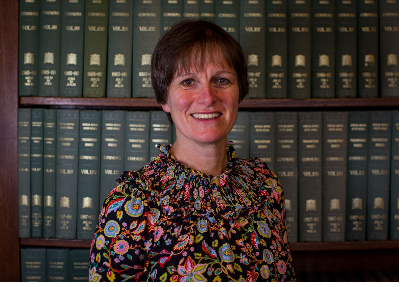
Emma is an Associate Professor of Marketing at Birmingham Business School. She is a white British female academic whose work straddles issues of sustainability, ethics and care in marketing and consumption. Her teaching takes a critical approach to understanding
the role of marketing in society and what responsibility entails in
the context of a business school.
Project aims and principles
The structural and systemic nature of colonialism means that decolonising cannot be a side act or an ‘add on’. To decolonise a business school requires a fundamental and comprehensive approach across all organisational levels and activities. This is why from the outset, to avoid the project becoming an exercise in ticking boxes, the project’s central objective was broad and ambitious:
To recognise colonisation within BBS programmes, teaching, research and the way the school operates and to find effective ways to dismantle it, enabling a decolonised reimagining of our business school curriculum and research and related activities.
Four sub-objectives were also created to guide our approach:
- To make sure the project is informed by decolonisation scholarship and to conduct research into our decolonisation experience as well as the impact and effectiveness of the changes put in place and to showcase our learnings.
- To develop a series of activities to build on and expand students and staff knowledge of what colonisation means in context and how it manifests in the Business School environment and to discuss and agree what it would mean to have a decolonised Business School
- To assess current activities and practices in the School and encourage and enable reflexive practices amongst both staff and students;
- To support the development and implementation of new decolonised practices across teaching, research and other School activities – this will be done in a co-creative and collaborative way building on existing research and literature.
We have already declared the focus on positionality in our work. Also central was the recognition that decolonising needs to take into account the lived experiences of the people and the context within which it is taking place (Jammulamadaka et al., 2021)
More research is needed to understand models and practices that can be used when engaging with decolonial work within the Business School context. With this in mind, we ground our work within the following collective beliefs, approaches and principles:
- This is not something that can be imposed but must be debated, collaborated on and co-created
- A safe, supportive environment where decolonisation and issues of coloniality can be discussed is crucial.
- The project needs to be inclusive, allowing everyone within the School to be involved in its evolution.
- This is an ongoing journey, not a finite process and shouldn’t be treated as a tick box exercise but more a life-long commitment to continue reimagining and relearning.
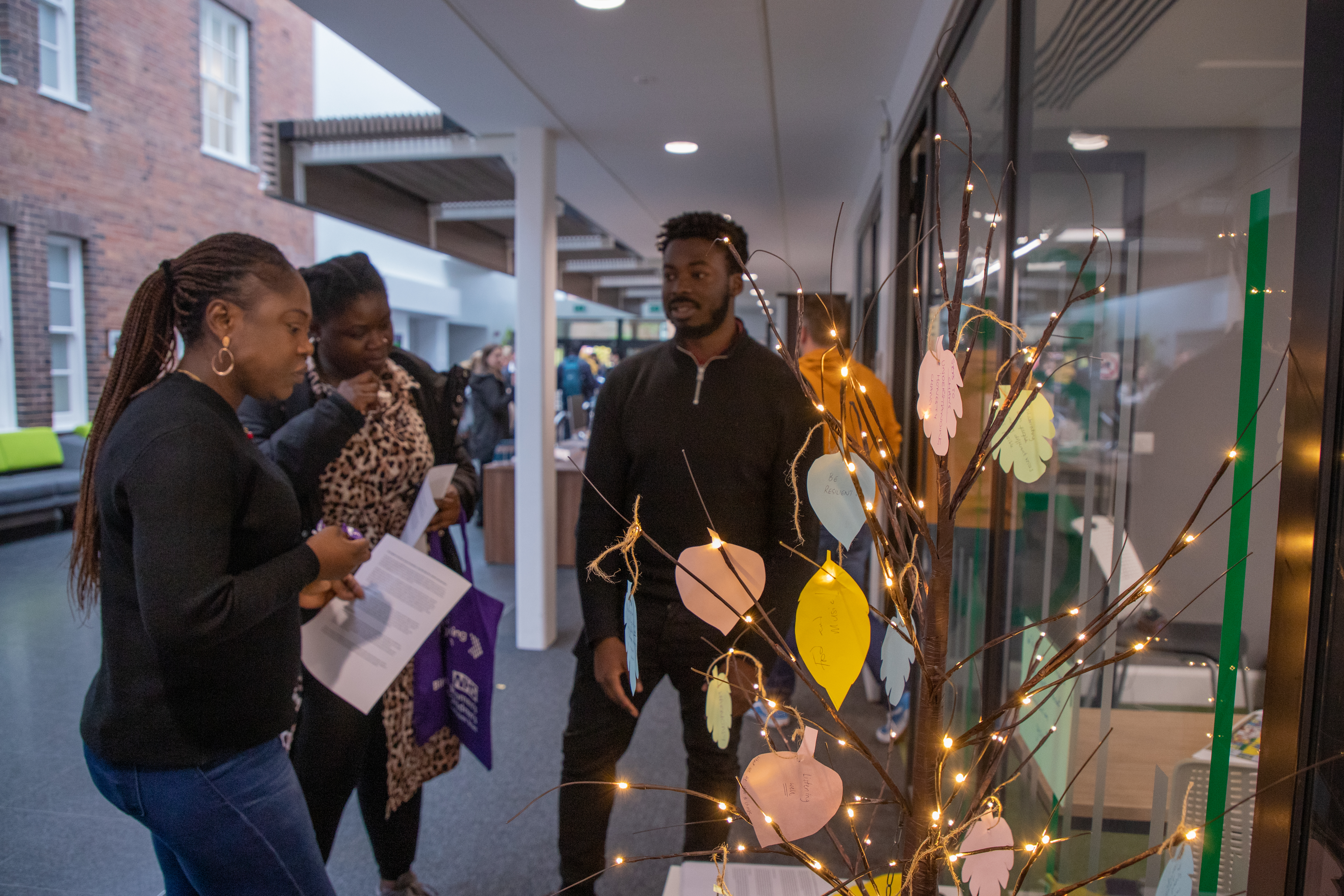
Our project aims and principles provide an overview of what we set out to achieve. To learn more about how we approached this work, visit the Project Activities page, where we describe our practice and guiding principles. You can also explore the Project Timeline to see key milestones and developments from 2021–2025, or visit the Project Outputs page to discover the resources, publications, and creative work that emerged from the project.
 Decolonising a Business School